
Reinforcement Is More Than Rewards
This is the fifth and final article in a series exploring change management through a behavioral science lens using ADKAR as a framework.
Mention reinforcement during a change initiative and someone will say:
"We don’t have the budget for that. We already give out gift cards during the holidays.”
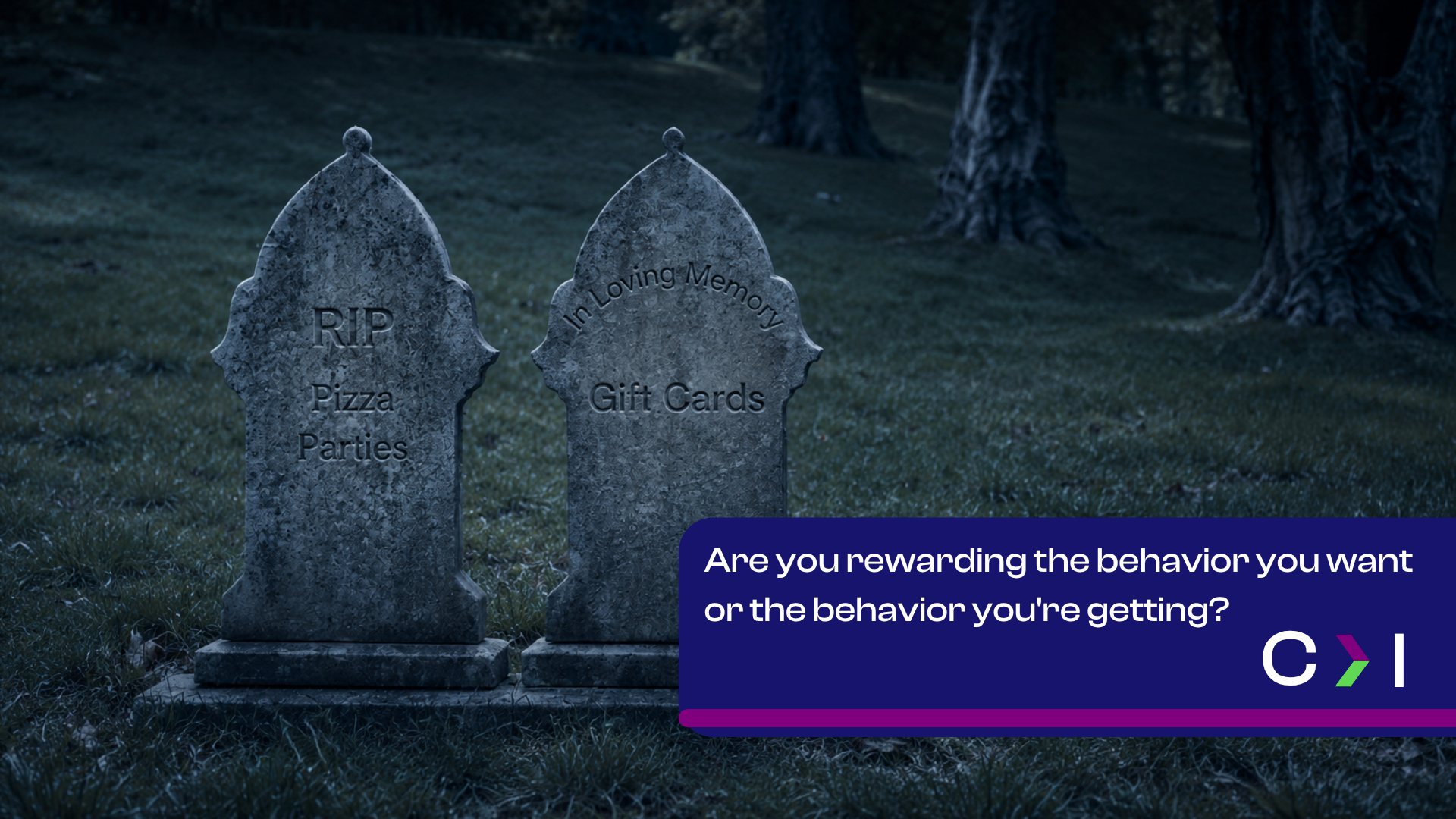
It’s a fair response. Reinforcement is often associated with gift cards, bonuses, employee recognition programs, and pizza parties.
But reinforcement isn't defined by rewards. It's defined by consequences that make a behavior more likely to occur again in the future.
That distinction changes the conversation entirely.
Reinforcement Doesn't Have to Cost Money
One of the biggest misconceptions about reinforcement is that organizations need to spend money to encourage behavior. Sometimes incentives can help, but people don't repeatedly perform behaviors because they received a bonus once. They repeatedly perform behaviors because those behaviors work.
That’s why the most powerful reinforcement systems are built directly into the work itself.
Imagine a company implements a new customer intake process. The old process required employees to enter the same information multiple times, track requests through email, and spend time following up with different departments for updates.
The new process automates handoffs, eliminates duplicate work, and provides real-time visibility into request status. Employees save time. Customers receive faster service. Problems get resolved more quickly. In this scenario, employees don't need additional incentives to continue using the new process.
Designing Better Consequences
A useful starting point is mapping the current process and identifying sources of friction, delay, rework, and unnecessary effort.
Ask questions like:
How many approvals are required?
How many handoffs occur between teams?
How many systems require duplicate data entry?
How often do employees need to wait for information before moving to the next step?
Once those friction points are identified, you can begin redesigning them.
Could Step 2 move directly to Step 4?
Do three approvals really add value?
Could information be entered once instead of three times?
Could employees receive immediate feedback instead of waiting for a monthly review?
Every process creates consequences. Some encourage desired behaviors. Others unintentionally reinforce delays, workarounds, and frustration.
When organizations redesign a process, they're changing those contingencies. And when the desired behavior becomes easier, faster, or more effective than the alternative, reinforcement is built directly into the workflow.
Feedback as Reinforcement
Some consequences are built directly into the work. Others need to be made visible.
Imagine a customer service team implements a new process designed to reduce response times. Each month, the team reviews a dashboard showing response times decreasing and customer satisfaction increasing.
No prizes are awarded.
No bonuses are attached to the metric.
Yet team members begin discussing ways to improve the numbers even further.
Why?
Because progress can be reinforcing.
The dashboard provides evidence that their effort is making a difference. It connects behavior to outcomes. In behavioral science, feedback is often one of the simplest and most cost-effective ways to support behavior change because it helps people see the consequences of their actions.
Putting It Into Practice
Throughout this series, we've explored ADKAR through a behavioral science lens. While communication, training, and stakeholder engagement are important, sustainable change often means looking beyond traditional change management activities and examining the contingencies built into the work itself.
At Change Impact Partners, we help organizations do both. We combine change management, behavioral science, and process improvement to help clients create lasting adoption and stronger business outcomes.
Because understanding change is important. Designing for it is what creates ROI.