
The Culture You're Building Through Change
This is the second article in a series exploring change management through a behavioral science lens using ADKAR as a framework.
Something we’ve heard repeated a lot in change management initiatives is some variation of the phrase “We know not everyone is going to love this change”. That’s probably true, but leaders should be curious about the alternative. What if employees did see value in the change? What if their first thought was “This will make things so much easier”? That response isn't something organizations should hope for. It's something they should design for.
So, what does a “desire” to change really mean? In behavioral science it means that participation feels worthwhile. People don't change their behavior just because they understand the reason for a change. They change their behavior when they believe the future state will be better than the current one, or when continuing the current behavior becomes less valuable than adopting a new one.
Why should organizations intentionally design for this? Because the way that organizations handle change not only sets a precedent for future changes, it shapes the entire culture of the company.
The Cost of Moving Forward Anyway
Let’s image a scenario: A company implements a new CRM system. During the rollout, employees raise concerns about additional administrative work, workflow bottlenecks, and impacts to customer response times. Leadership acknowledges the concerns but moves forward without making meaningful adjustments. The system gets implemented, and the project is considered complete.
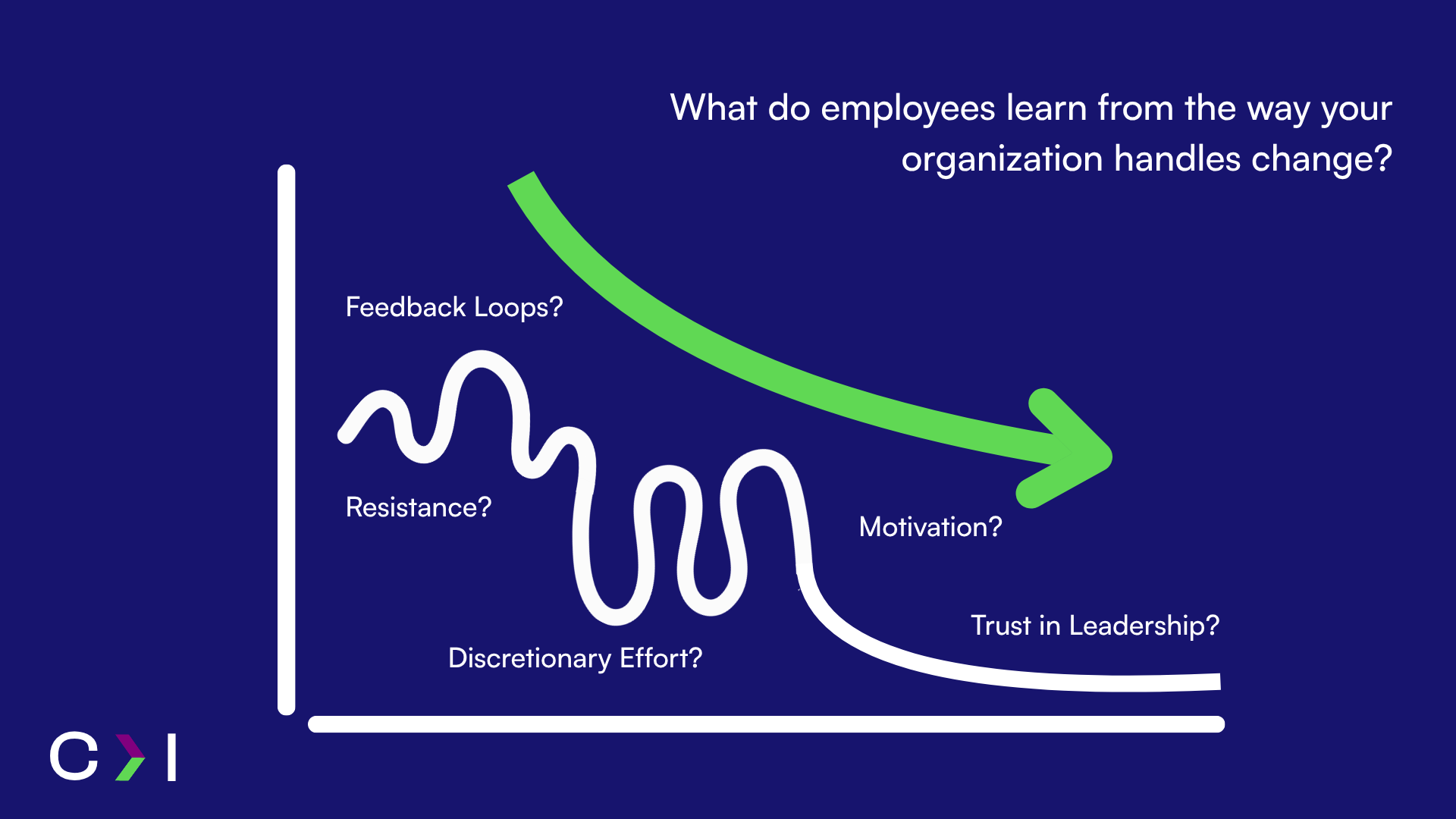
But employees learn something from the experience.
They learn that decisions are made at the top and feedback has little influence on the outcome. The next time a change is introduced, fewer people speak up. Managers stop escalating concerns because they don't expect anything to change. Turnover increases. Glassdoor reviews worsen. Recruiting becomes harder, and the quality of new hires declines. Ultimately, the company pays the price for failing to create the conditions that make participation in changes worthwhile.
Behavioral scientists refer to these patterns as interlocking behavioral contingencies. In simple terms, the way leaders respond influences how managers respond, which influences how employees respond. Over time, those interactions create larger patterns across the organization.
The aggregate product of those interactions is not resistance to a single project. It's culture.
Desire matters because every change teaches employees whether participation is worth the effort.
It's not just about whether employees support the current change. It's about whether the organization is creating a culture that makes future changes easier or harder to implement.
Designing the Culture You Want
This raises an important question for leaders: What kind of culture are you creating when your organization asks people to change?
One where employees surface concerns early? Or one where they keep concerns to themselves because they've learned nothing will change?
One where future changes are met with trust? Or one where they're met with skepticism before they've even begun?
Every change teaches employees something.
The question is whether you're intentionally designing those lessons or leaving them to chance.